
Key Takeaways for Homeowners
- •Blackland Prairie clay has high plasticity, expanding up to 10% when wet.
- •Soil shrinkage in dry summers removes support beneath foundation perimeters.
- •Buried copper lines experience severe shear stress and abrasion against aggregate.
- •Overhead PEX rerouting isolates plumbing from future foundation movement.
Direct Answer: How Expansive Clay Causes Slab Leaks
Expansive clay soil causes slab leaks in Dallas County homes because Houston Black clay undergoes dramatic volumetric expansion—swelling by up to 10% during rainy seasons and shrinking into deep chasms during summer droughts. This movement exerts up to 10,000 pounds per square foot of hydraulic uplift pressure against concrete foundation beams. When the foundation flexes, rigid copper water supply lines and brittle cast iron drain pipes buried within or beneath the slab undergo severe bending, tension shear, and gravel abrasion, ultimately snapping fittings or developing microscopic friction pinhole leaks.
If your home in Duncanville, DeSoto, or Lancaster experiences sudden water pressure loss or hot floor spots, call Ten Mile Creek Plumbers at (858) 363-8298 for non-invasive under-slab electronic leak detection.
The Geology Beneath Duncanville Slabs: Houston Black Clay Mechanics
Southern Dallas County rests on the Houston Black clay series of the Texas Blackland Prairie. This soil is rich in montmorillonite clay minerals that act like a sponge: absorbing massive amounts of water during wet seasons and shrinking into deep chasms during prolonged summer droughts. Soil scientists measure this behavior using the Plasticity Index (PI); while stable sandy loam has a PI under 15, Dallas County clay routinely measures between 45 and 65, representing extreme shrink-swell potential.
As the moisture gradient fluctuates between the perimeter of a home and the dry center beneath the slab, differential settlement occurs. One corner of the house rises three inches while another settles, placing enormous mechanical stress on underground plumbing networks.
Mechanical Friction, Soil Settlement & Pipe Shearing
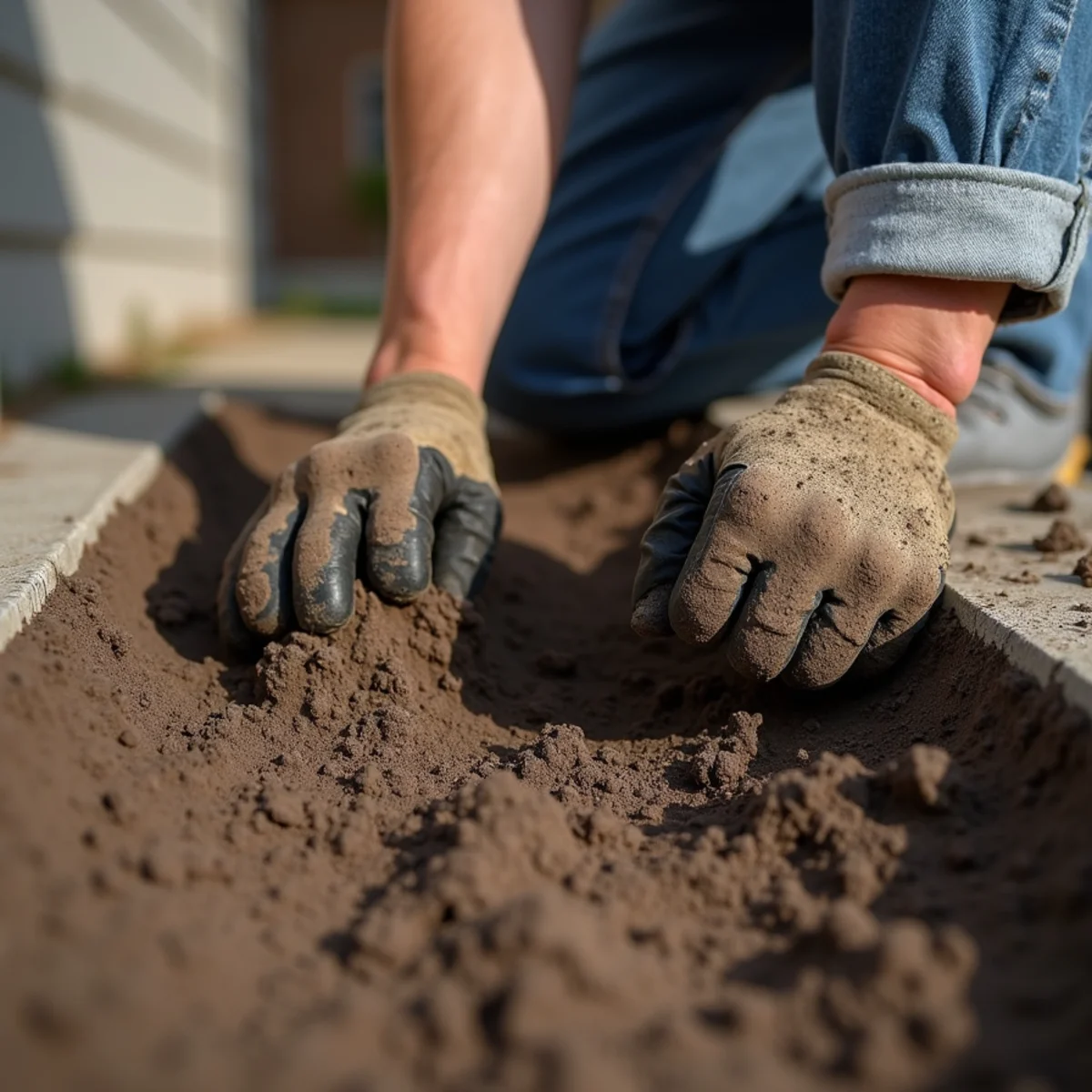
Copper tubing expands and contracts slightly every time hot water runs through it. When ground movement shifts the slab, copper rubs directly against sharp aggregate in the concrete. Over decades, this microscopic abrasion wears down the pipe wall until a pinhole leak develops.
Furthermore, drain laterals passing through foundation grade beams experience shear forces. When the soil outside the foundation settles while the foundation slab remains elevated on concrete piers, the weight of the dropping earth acts like a guillotine on cast iron or PVC sewer pipes, cracking the pipe right at the perimeter foundation wall.
Need Hands-On Emergency Assistance?
Speak directly with our local Duncanville dispatch desk at (858) 363-8298.
Seasonal Shrink-Swell Cycles: Soaker Hose Maintenance Protocol
The most critical factor in preventing foundation-induced slab leaks is maintaining uniform soil moisture year-round. During scorching Texas July and August heatwaves, un-watered clay pulls away from foundation perimeter beams, opening cracks 2 to 4 feet deep that allow air to desiccate deep subsoil.
Homeowners should install dedicated foundation soaker hoses placed 12 to 18 inches away from the foundation edge. Operating soaker hoses for 20 to 30 minutes twice daily keeps the clay hydrated and prevents foundation dropping that tears supply lines apart.
Permanent Solutions: Why PEX Overhead Reroutes Neutralize Soil Shifting
Attempting to patch a copper slab leak by jackhammering and soldering a new copper coupling creates a rigid point that will simply fail again when the next dry summer arrives. At Ten Mile Creek Plumbers, we recommend abandoning failed sub-slab copper lines and installing overhead PEX-a bypasses through the attic and interior walls.
PEX piping is completely decoupled from foundation movement. As your slab naturally breathes with seasonal clay cycles, flexible PEX flexes harmlessly inside wall chases, permanently immune to under-slab soil shear.
Dallas County Clay Soil Dynamics: Seasonal Impact on Foundation Plumbing
| Season & Climate | Soil Moisture State | Foundation Movement | Plumbing Failure Mechanism | Homeowner Mitigation Strategy |
|---|---|---|---|---|
| Spring (March – May) | Saturated / Maximum Expansion | Upward heave along exterior perimeter | Bending shear on vertical copper risers | Ensure downspouts discharge 5+ ft from slab |
| Summer (June – August) | Extreme Desiccation / Deep Fissures | Foundation drops & perimeter drops | Shearing of sewer lateral at grade beam exit | Run perimeter soaker hoses daily; maintain moist soil |
| Autumn (Sept – Nov) | Uneven re-wetting cycles | Differential heaving & twisting flex | Pinhole leaks from aggregate friction | Acoustic leak sweep if water bills jump |
| Winter (Dec – Feb) | Cold contraction & freeze risk | Minor settling with freeze cycles | Attic water line freezing & slab joint strain | Insulate attic lines & drip taps during hard freezes |
Why Post-Tension Cables Do Not Protect Sub-Slab Plumbing Lines
Many modern homeowners in southern Dallas County believe their post-tension concrete foundations prevent slab leaks. While high-strength post-tension steel cables prevent the concrete slab from cracking in half during clay soil heaving, the slab still moves as a rigid plane, tilting, flexing, and warping over undulating clay. Rigid copper supply lines and cast iron drain branches are locked inside this flexing concrete matrix. As the foundation heaves, the concrete grips the exterior of the pipe while subsoil drags the downward branches in opposite directions. The resulting mechanical stress exceeds the tensile yield strength of soldered copper fittings. That is why overhead PEX reroutes—which remove pressurized water pipes from the foundation entirely—are the gold standard solution recommended by structural engineers.
Frequently Asked Questions
Practical answers from our local plumbing repair team.
Yes. Maintaining consistent soil moisture around your foundation perimeter with soaker hoses prevents severe clay shrinkage and swelling cycles that flex the concrete slab and snap underground plumbing lines. The goal is to keep the soil consistently damp like a wrung-out sponge.
Related Services & Local Coverage
Explore our dedicated service options and neighboring dispatch areas:
Don't Let Plumbing Problems Escalate
Every plumber we send is licensed and insured in Texas. Upfront written price given before work starts.
Not Urgent? Send a Service Request
If your plumbing project can wait for scheduled daytime evaluation, submit your details below. We will coordinate with an independent licensed Texas plumber in Duncanville to confirm your appointment.
Do not wait for a form response if water is spreading or sewage is surfacing. For the fastest help, call immediately:
(858) 363-8298 (Answering 24/7)